Restoring on rustic land: what is permitted, and what to plan for
A calm guide to restoring a historic estate in the Mallorcan countryside — from the first plans to the finished house.
 Rolf Herbert ZscharnackOctober 20266 min read
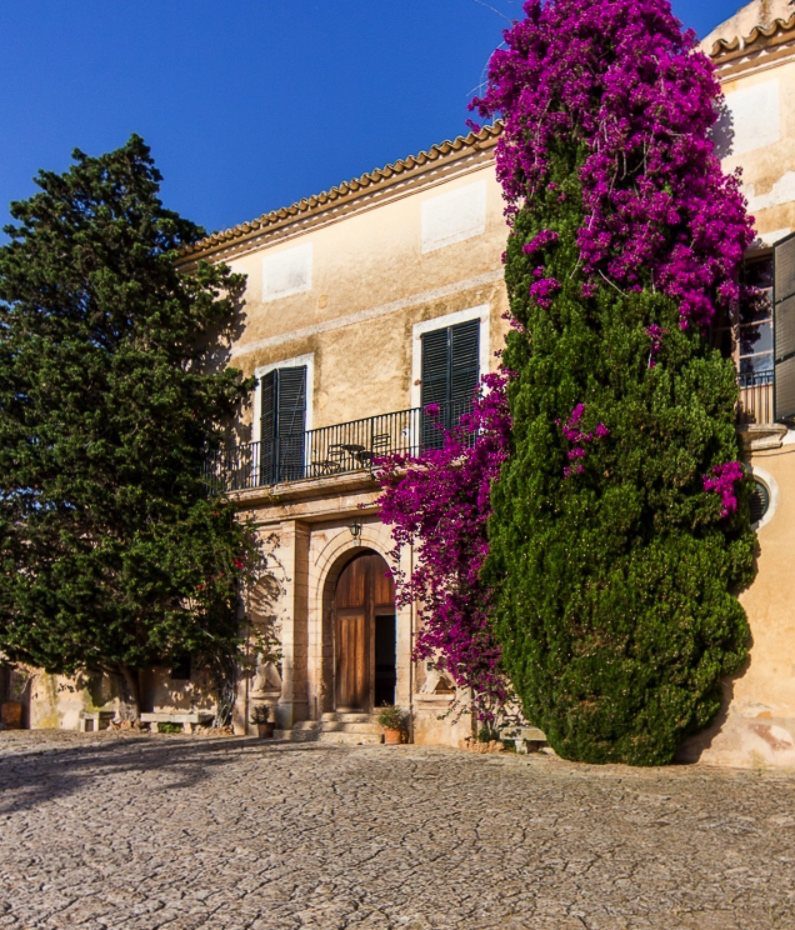
Why the countryside is protected — and why that helps you
Almost every possessió and country estate on Mallorca stands on rustic land — suelo rústico. The rules for building here are deliberately strict, and for good reason: they are what keep the island's countryside open, green and unspoilt. For the owner of a historic estate, they protect exactly what makes the property so valuable — the landscape around it, and the certainty that it will stay that way.
Within these rules, a great deal is possible. Restoring a historic estate on rustic land is something owners do successfully every year, and with good preparation it is a well-trodden path.
What can usually be done
The details depend on the municipality, the classification of the land and the legal status of the existing buildings. As a general orientation:
- Restoring and renovating existing buildings that are legally established is the core of almost every project — from the roof to the floors, from the façade to the interiors.
- Modernising the technical installations — heating, cooling, water, electricity, renewable energy — is generally possible throughout.
- Converting historic outbuildings such as a tafona, a porxo or former stables into living or guest spaces is often feasible, within the rules that apply to the estate.
- Gardens, terraces and a pool can usually be created or renewed. For a pool, the plot needs the minimum size set by the regulations of the area, and a licence is required — in most areas this is straightforward, while in the Serra de Tramuntana the requirements are somewhat stricter.
- Extensions and new buildings are the area where rules are most restrictive, and where early advice from the architect matters most.
Your architect will clarify the possibilities for a specific estate before or during the purchase, so that you know what your plans can include from the very beginning.
A good project starts with the right team
The most successful restorations share one thing: the right people from the start. An architect experienced with historic buildings and rural land knows the regulations and the authorities, and designs a project that is both beautiful and approvable. Specialised craftsmen bring the traditional skills — lime plaster, marès stonework, dry-stone walls, timber ceilings — that give the house its authentic feel.
After many years on the island, I am happy to introduce owners to architects and craftsmen I have known and trusted for a long time.
What to plan for
- Time. Licences for works on rustic land, and especially on protected buildings, take some months. Planning this in from the start keeps the project relaxed.
- Budget. Restoring with traditional materials and craftsmanship has its own costs. A clear plan, drawn up with the architect, avoids surprises.
- Phasing. Many owners restore in stages — the main house first, outbuildings and gardens later — and enjoy the estate from the very first season.
- Water and energy. Wells, cisterns and solar energy are a natural part of a modern country estate and add lasting independence.
The reward
A restored possessió or country estate combines centuries-old walls with the comfort of today, in a landscape that is protected and will remain so. Every owner who has been through a restoration will tell you the same thing: the extra care was worth it. What you create is not simply a house, but a place that has been given a new chapter in its long history — and that nobody will ever be able to build again.